
Developments 5 August 2026 2 min read
ART: Harry Spike Reimagines Masterpieces Through a Queer Lens
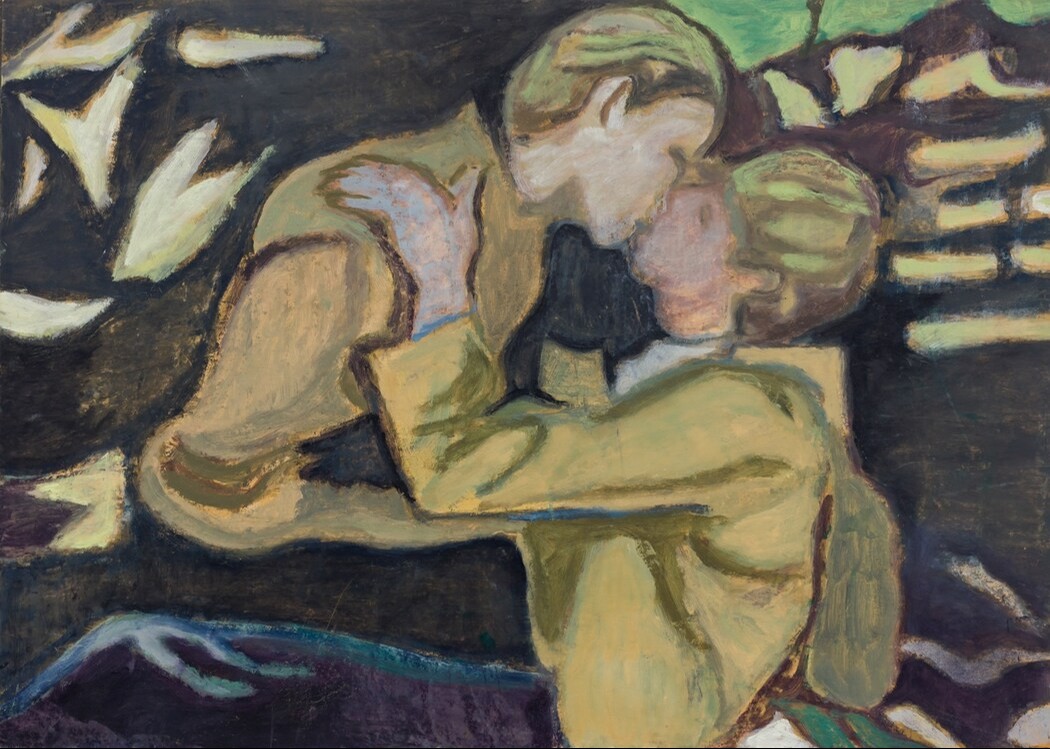
In Harry Spike’s art, people and landscapes seem to blend right into one another. His paintings are rooted in personal memory, identity, and quiet emotional digging, pulling from his own lived experiences, local folklore, and classical art history. He focuses heavily on the male form, often painting faceless or elusive figures caught in moments of soft vulnerability—crouching, kneeling, reaching for the ground, or resting together.
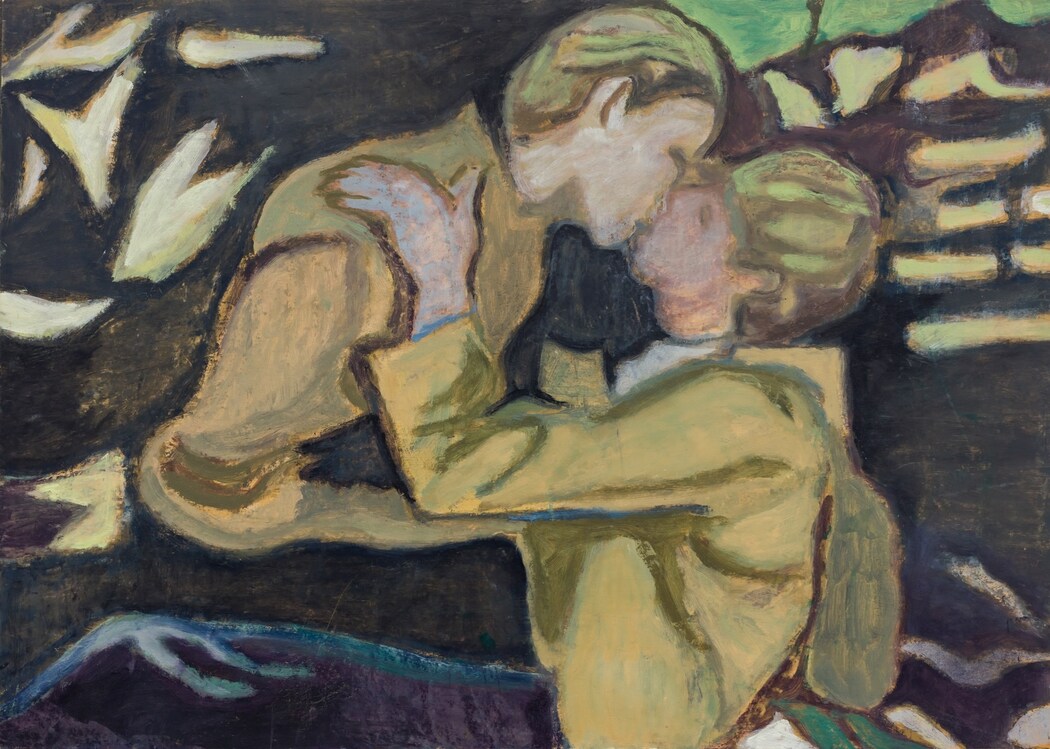
Car park (2023)
Much of Spike’s imagery is tied to his upbringing in the Peak District in England. The area’s rolling hills, ancient stone landmarks, and local legends act as both setting and metaphor. Titles referencing places like Hob Hurst’s House or Dove Holes connect physical earthwork to psychological exploration. For Spike, turning soil becomes a stand-in for diving into the unconscious—a process reminiscent of Carl Jung’s psychological digging, where you explore your inner world through imagined doors, tunnels, and caves.
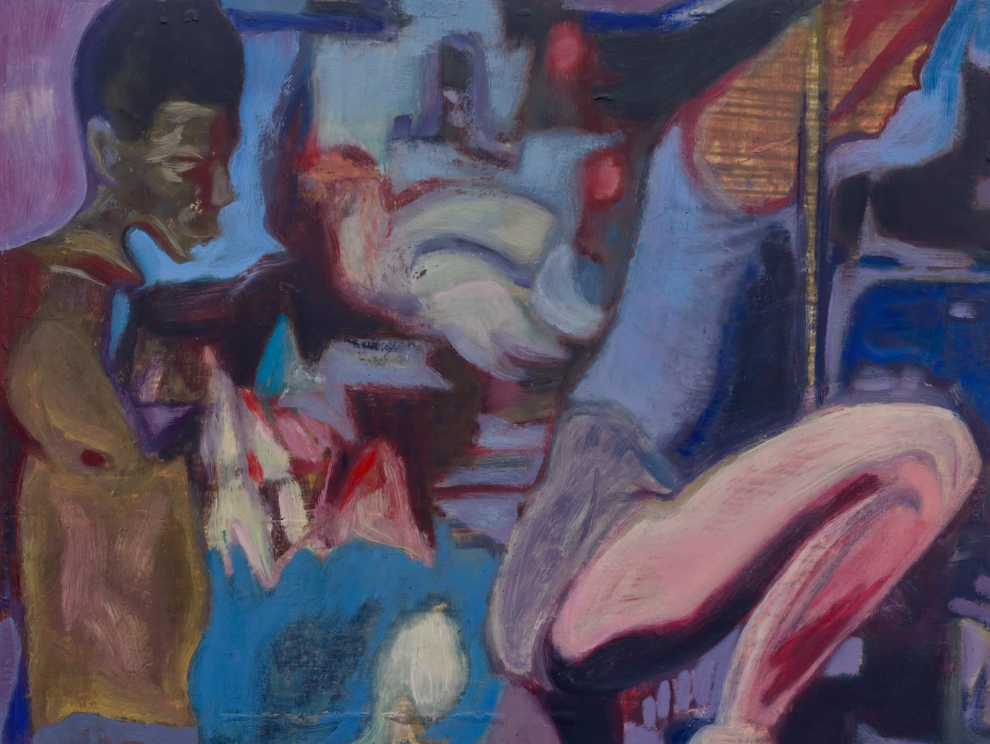
Halve it, Then Halve it Again (2024)
A strong queer perspective drives these scenes, offering a fresh, intimate spin on classic art history motifs. In After Piero, Spike takes the dramatic layout of Piero della Francesca’s The Resurrection and reinterprets it with nude male bodies resting together in gentle proximity. In Icarus’ Wheel, he looks back at Herbert Draper’s The Lament for Icarus—a painting whose subtle homoerotic tone caught his eye as a kid. Seen from an overhead angle, Spike's figure wears a faint, peaceful smile, flipping a story about hubris into something much more quiet, contented, and open.
Underneath the themes, Spike’s work is deeply grounded in drawing and graphic playing around. He usually starts with tiny fragments of text—snippets of lyrics, notes from dream journals, or random overheard lines—alongside real-life sketches and collected photos. As he moves those ideas onto paper, wood board, or canvas, he puts down layers of ink, gouache, pastel, oil, or acrylic, only to scrape and scrub them back. What’s left behind are misty, translucent washes of colour that feel almost ghost-like.
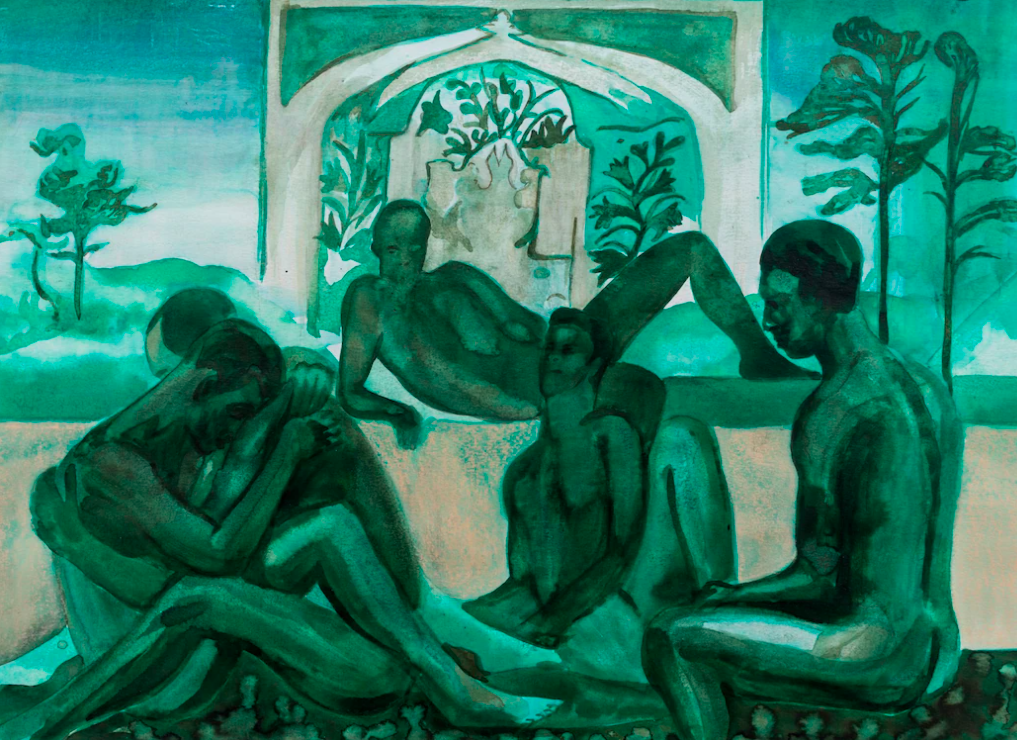
After Piero (2025)
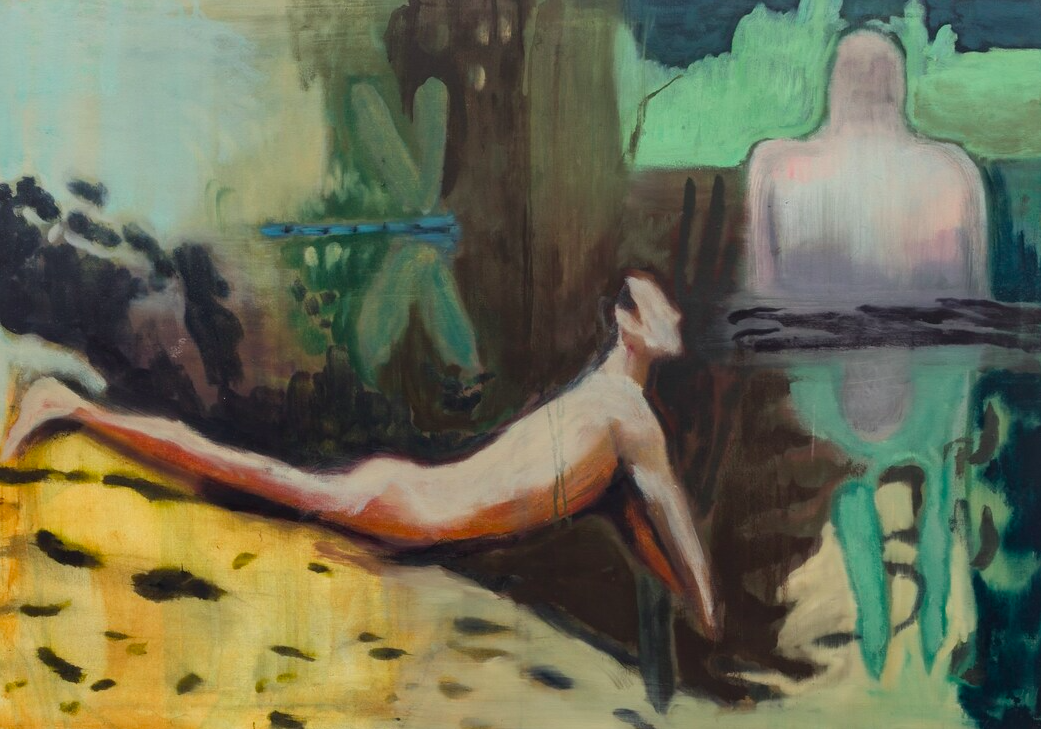
Anyone's Will But Your Own (2023)
He likes pushing his materials in unusual ways, using Conte crayons like watercolours or building up paint with the delicacy of coloured pencil lines. Thin, rubbed-down coats of paint give the surfaces a soft, glowing depth, while the overall flow feels almost like a film storyboard. The scenes don't tell a straightforward story; instead, they drift between different moods and times, balancing the buzz of late nights in shared spaces with the quiet stillness of the morning after.
At their core, Spike’s paintings act as soft boundaries between real life and memory. Wrapped in an overarching sense of calm, his figures inhabit spaces where landscape, personal history, and queer desire comfortably meet.
All images Courtesy of the artist and Cob Gallery